

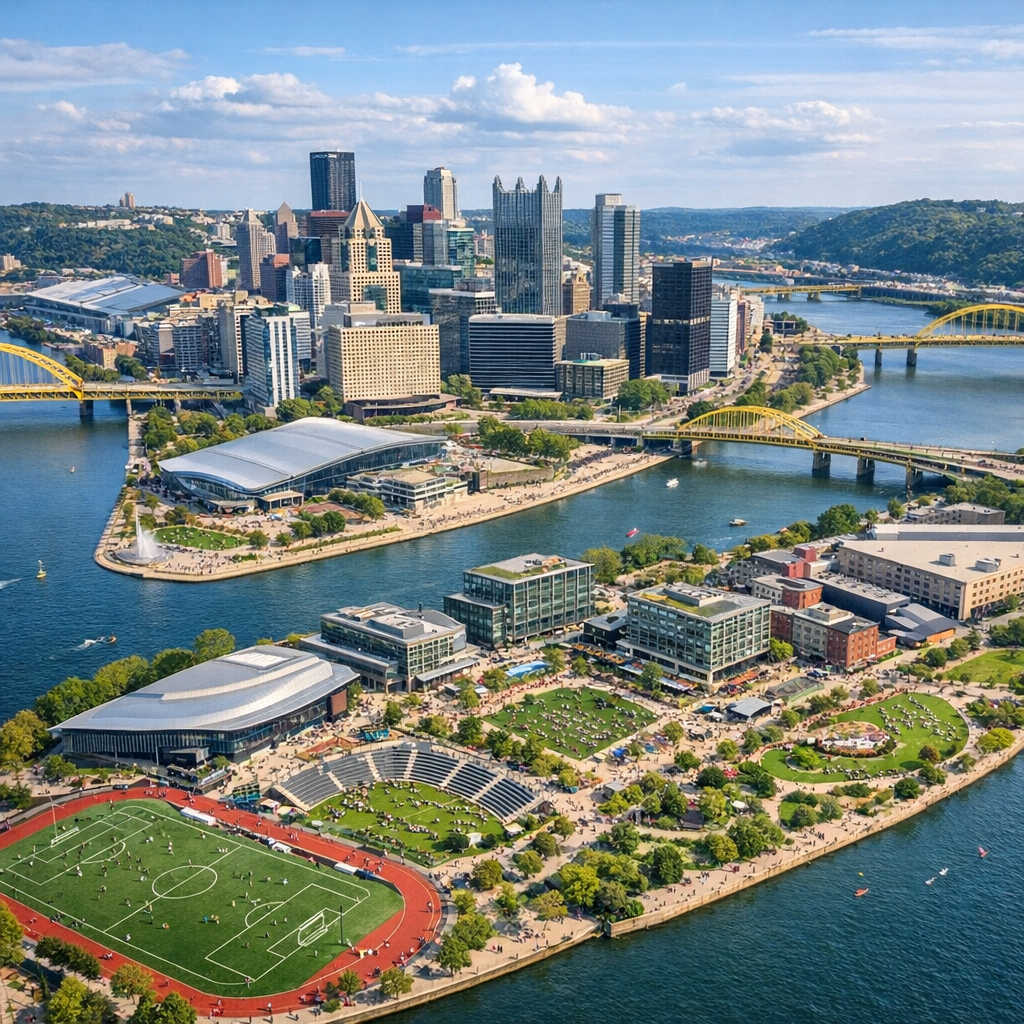
Pittsburgh is undergoing significant transformations across various sectors, reflecting the city’s commitment to growth and community well-being. Here are some key developments shaping our city:
School District Consolidation
The Pittsburgh Public Schools (PPS) board has approved the Future-Ready Facilities Plan, which includes closing nine school buildings and reconfiguring grade levels. This decision addresses challenges such as declining enrollment and aging infrastructure. Affected neighborhoods include Friendship, Homewood, the Hill District, Lawrenceville, and the North Side. While the plan aims to create equitable opportunities and improved learning environments, some community members have raised concerns about transportation and the impact on underinvested areas.
Expansion of Bike Share Program
POGOH, Pittsburgh’s bike share program, is set to expand beyond city limits for the first time, driven by increased demand and federal funding. Allegheny County has been awarded $1.5 million to support this expansion, aligning with a national trend toward non-car transit options. The program plans to add 17 new stations in surrounding suburbs, with communities like Millvale and Wilkinsburg expressing interest. This initiative aims to enhance regional connectivity and promote sustainable transportation.
Population Growth Amid Regional Decline
For the third consecutive year, Pittsburgh’s population has experienced modest growth, reaching 307,632 residents. This trend contrasts with the broader metropolitan area, which continues to see an overall population decline. Suburbs such as Cranberry in the North Hills and parts of Butler County have seen significant growth, while first-ring suburbs and economically challenged areas like the Mon Valley have experienced decreases. This growth within the city highlights varying demographic trends and underscores the importance of targeted community development efforts.
Downtown Revitalization Through Small Businesses
In an effort to revitalize Downtown Pittsburgh, the Pittsburgh Downtown Partnership (PDP) has launched the Vibrancy Initiative, focusing on supporting small businesses. With $1.5 million raised from philanthropic groups, including $400,000 directed toward rent abatement, the initiative has facilitated the addition of 28 new small businesses, pop-ups, and art installations since 2025. This approach aims to attract residents and consumers, fostering economic recovery and community engagement in the downtown area.
City Budget Reassessment
Facing a projected deficit of $30 million to $40 million, Mayor Corey O’Connor has announced plans to reopen Pittsburgh’s 2026 budget to address financial concerns. Despite previous projections of a surplus, the city ended 2025 with an $8.6 million shortfall. The administration is committed to maintaining critical services without raising taxes or laying off city workers, emphasizing the need for accurate budgeting and fiscal responsibility.
Advancements in Digital Equity
The City of Pittsburgh is actively working to close gaps in digital access and literacy through its participation in the Pittsburgh Digital Equity Coalition. Efforts focus on affordability, availability, services, and skills training, with particular attention to seniors, families with K-12 students, and Black citizens who are disproportionately disconnected. These initiatives aim to ensure all residents have the necessary tools and knowledge to participate fully in the digital age.
These developments reflect Pittsburgh’s ongoing efforts to address community needs, promote sustainable growth, and enhance the quality of life for its residents.