

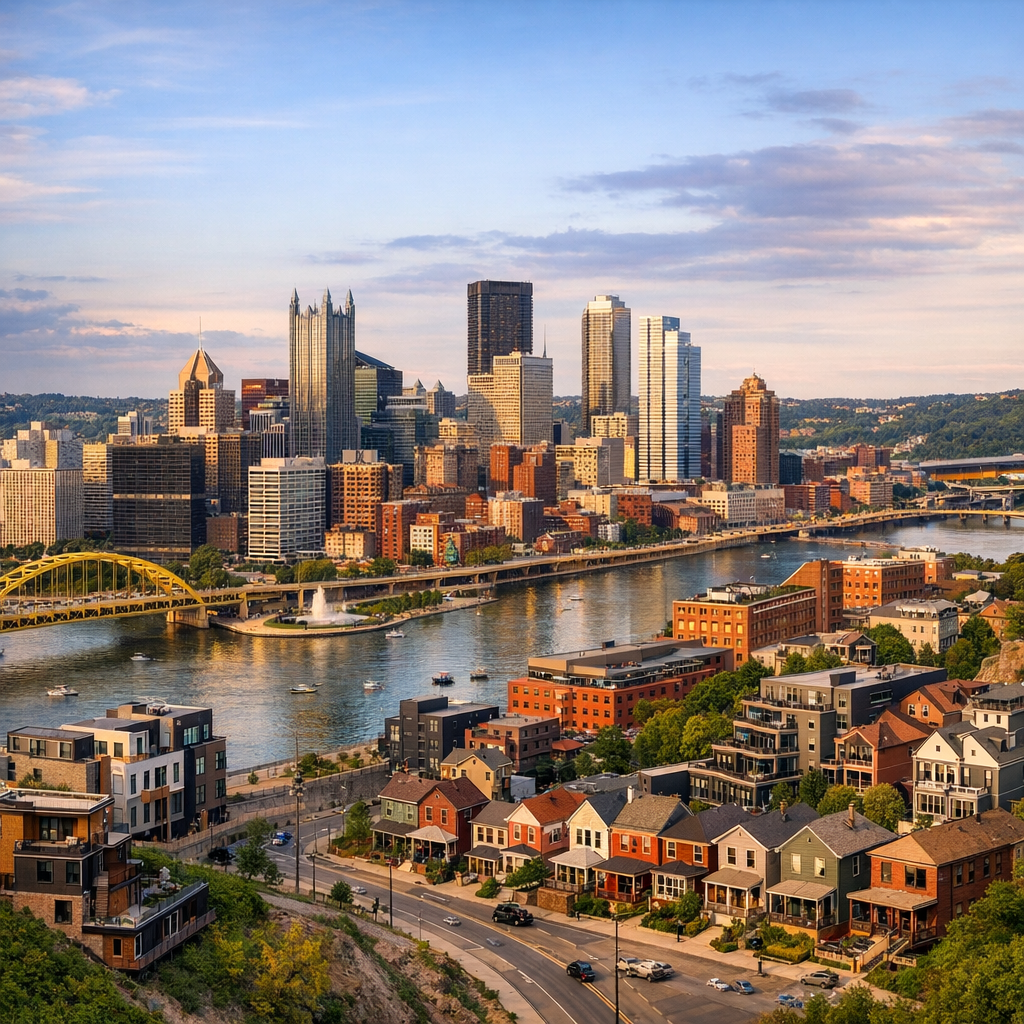
Pittsburgh’s housing market is experiencing notable shifts, presenting both challenges and opportunities for residents and potential buyers.
Home Prices and Market Trends
As of mid-2026, the average home value in Pittsburgh stands at approximately $246,117, reflecting a slight decrease of 0.7% over the past year. Homes are typically going under contract in about eight days, indicating a relatively brisk market pace. The median sale price is $255,967, with a median list price of $275,000. Notably, 28.4% of sales have been closing above the list price, while 54.6% have been below, suggesting a balanced negotiation environment for buyers and sellers alike.
Rental Market Dynamics
Contrary to national trends, Pittsburgh’s rental market has seen an uptick. Between February 2025 and February 2026, median rents in the metro area rose by 2.5%, defying the national trend of a 1.5% decline. This increase is particularly evident in neighborhoods near hospitals and universities, where demand remains strong. Factors contributing to this rise include slower apartment construction in 2025 and the city’s appeal to new residents.
Luxury Housing Segment
Pittsburgh remains one of the few major U.S. metropolitan areas where luxury homes—those in the top 5% of the market—can still be purchased for under $1 million. The median sale price for a luxury home in the city is $904,202, significantly lower than the national median of $1,374,470. This affordability continues to attract high-end buyers seeking value in the luxury segment.
Affordable Housing Initiatives
Efforts to increase affordable housing are underway. The Housing Authority of the City of Pittsburgh (HACP) and its development arm, Allies & Ross Management and Development Corporation (ARMDC), have invested over $17 million in gap financing and project-based vouchers toward seven downtown affordable housing developments. These projects aim to add nearly 500 affordable and mixed-income units to the city’s housing stock.
Additionally, a historic 120-year-old office tower at 4 Smithfield St. is being converted into 46 residential units, 39 of which will be designated for low-income residents. This $30 million redevelopment is expected to be completed by spring 2027, contributing to the revitalization of downtown Pittsburgh.
Conclusion
Pittsburgh’s housing market is in a state of flux, with modest declines in home values, rising rental rates, and significant investments in both luxury and affordable housing sectors. These developments reflect the city’s ongoing evolution and its efforts to meet the diverse needs of its residents.