

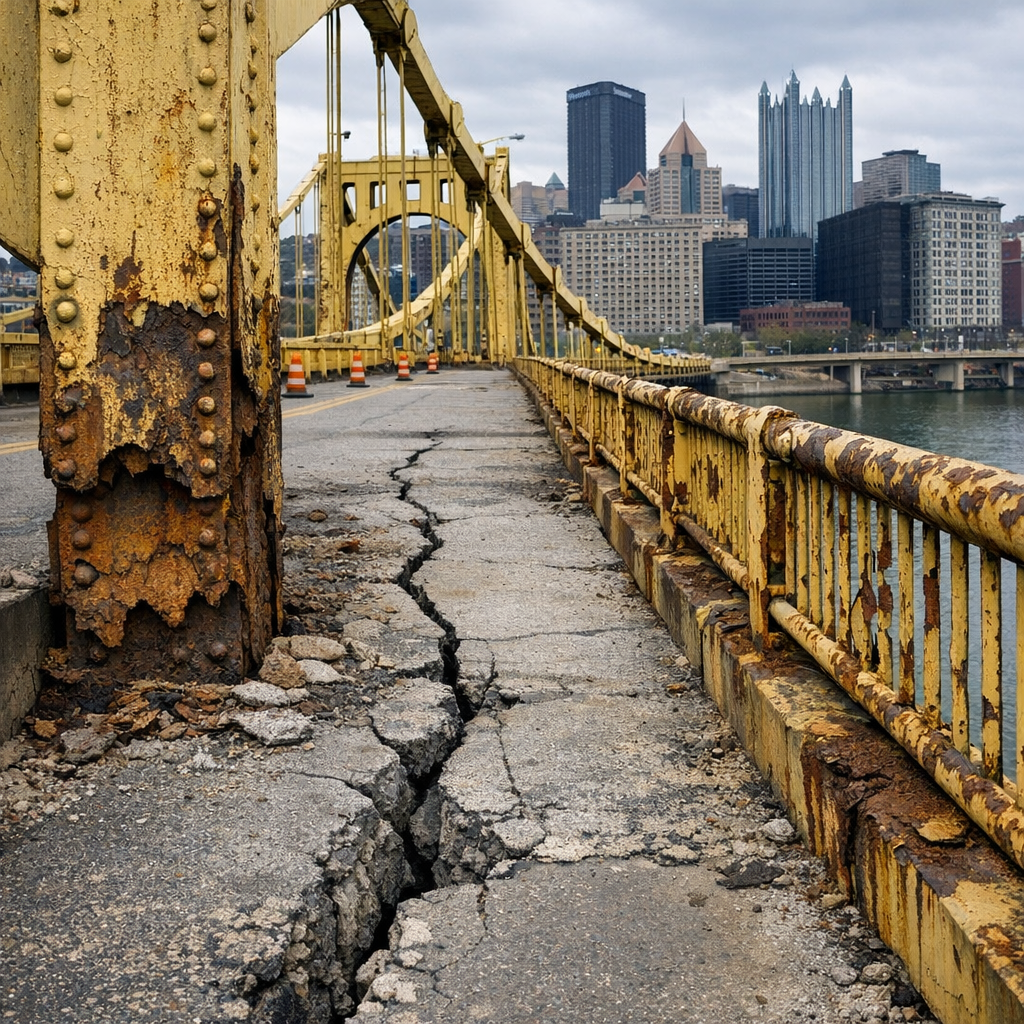
Pittsburgh’s infrastructure is at a critical juncture, with a substantial portion of its roads and bridges in dire need of repair. A recent report indicates that 38% of the region’s roads and 15% of its bridges are rated as ‘poor,’ highlighting the urgency for comprehensive maintenance and rehabilitation efforts.
Current State of Infrastructure
The report, published by the National Transportation Research Nonprofit (TRIP), utilized data from PennDOT and the National Highway Traffic Safety Administration to assess the condition of roads and bridges across Pennsylvania. The findings reveal that out of the total road miles in the Pittsburgh region, a significant percentage are in poor condition, necessitating immediate attention.
Implications for the Community
The deteriorating infrastructure poses several challenges for Pittsburgh residents:
- Safety Concerns: Poor road and bridge conditions increase the risk of accidents and vehicle damage.
- Economic Impact: Infrastructure issues can lead to increased vehicle maintenance costs and may deter businesses from investing in the area.
- Quality of Life: Daily commutes become longer and more stressful, affecting the overall well-being of the community.
City’s Response and Future Plans
In response to these challenges, the City of Pittsburgh has initiated several measures:
- Budget Allocation: The 2026 city budget includes significant investments in infrastructure improvements, aiming to address the most critical areas first.
- Community Engagement: City officials are seeking input from residents to prioritize projects and ensure that the most pressing needs are met.
- Partnerships: Collaborations with state and federal agencies are being pursued to secure additional funding and resources.
Conclusion
Addressing Pittsburgh’s infrastructure challenges is a complex task that requires coordinated efforts from government agencies, community organizations, and residents. By prioritizing safety and sustainability, the city aims to enhance the quality of life for all Pittsburghers and ensure a resilient infrastructure for future generations.